Address
304 North Cardinal
St. Dorchester Center, MA 02124
Work Hours
Monday to Friday: 7AM - 7PM
Weekend: 10AM - 5PM
Address
304 North Cardinal
St. Dorchester Center, MA 02124
Work Hours
Monday to Friday: 7AM - 7PM
Weekend: 10AM - 5PM
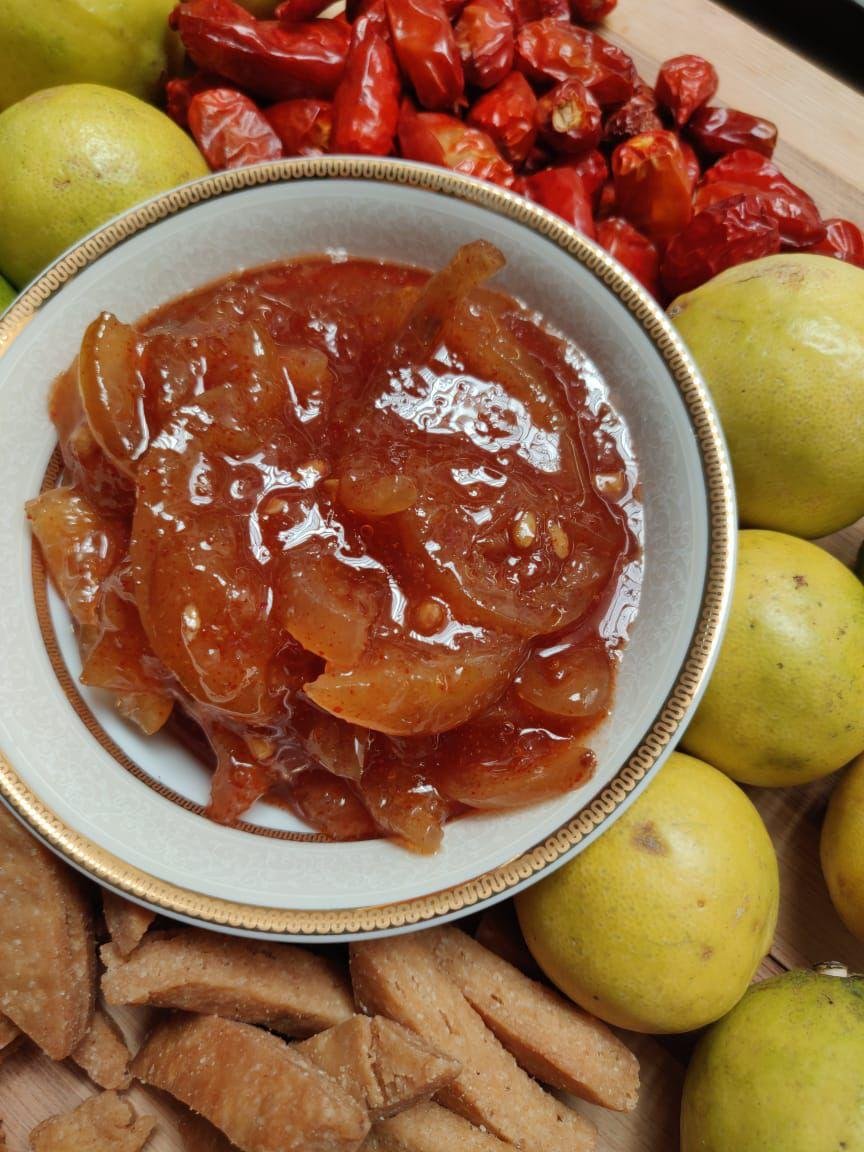
It would be easier, and far more profitable, to make JYOWNAR pickles in bulk. Bigger vats, faster mixing, a longer shelf life with the right preservatives — the factory playbook exists for a reason. We’ve chosen not to use it. Every jar is still made in small batches, the same way our family always made it, and here’s why that one decision matters more than almost anything else in the process.
When a batch is small enough, someone can actually taste it, smell it and check its consistency before it’s bottled. In a large production run, that kind of attention is impossible — quality becomes an average, not a certainty for each jar. Keeping our batches small is what lets us stand behind every single one that leaves the kitchen, not just a sample pulled for quality control.
Sun-dried, hand-pounded spices don’t behave like industrial masala — they need to be used fresh and mixed with care, not stored in bulk for weeks before processing. Small-batch production lets us work with spice that’s still at its peak, instead of holding large stock that slowly loses its aroma while it waits to be used in a bigger run.
Because JYOWNAR pickles use no artificial preservatives or colours, we don’t have the option of making a huge batch and letting it sit. Small batches are made, matured and bottled close to when they’ll be sold — the achaar stays the way it should, without chemistry doing the work that time and care are meant to do.
Our recipes were refined over years by the aunts and grandmothers who first made them, in proportions meant for a kitchen, not a factory floor. Scaling them up would mean changing them — using different equipment, different timings, different judgement calls. Making small batches is how the original recipe survives, unchanged, jar after jar.
In practice, small-batch production means JYOWNAR can only make a limited quantity at a time, and certain pickles may occasionally sell out before the next batch is ready. That’s a trade-off we’re comfortable making — it’s the only way to guarantee that what arrives at your table tastes the way it’s supposed to, every single time.
It reflects the extra time, attention and lower output involved compared to mass production — but it’s the only way we can keep quality consistent across every jar.
Because each batch is limited by design and made only when spices and produce are at their best, rather than kept in constant mass supply.
It’s slower, and it limits how much we can make — but it’s the only way we know to keep every jar tasting like it came from our kitchen, not a factory.

[…] Why Small-Batch Matters […]