Address
304 North Cardinal
St. Dorchester Center, MA 02124
Work Hours
Monday to Friday: 7AM - 7PM
Weekend: 10AM - 5PM
Address
304 North Cardinal
St. Dorchester Center, MA 02124
Work Hours
Monday to Friday: 7AM - 7PM
Weekend: 10AM - 5PM
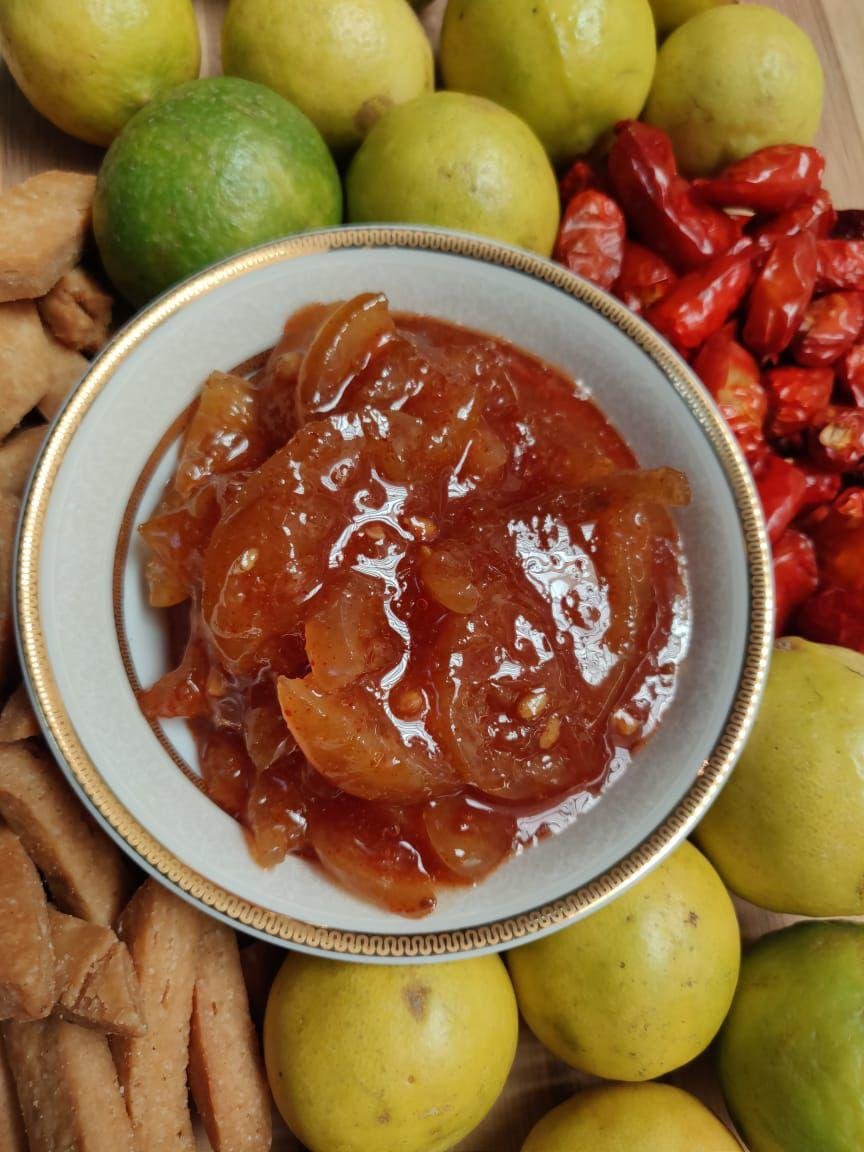
JYOWNAR didn’t start as a business — it started in a home kitchen, in the middle of festival cooking, where mothers and grandmothers presided over big batches of food for Diwali, Holi and Janmashtami, and pickles were made alongside everything else, the way they always had been. That is still, quite literally, how every jar is made today. Here’s what actually happens between the kitchen and your table.
Every batch begins with selecting the raw material itself — mangoes, chillies or lemons chosen at the right stage of ripeness, not whatever is cheapest that week. A pickle can only be as good as what goes into it, and this is the one step we’ve never let anyone rush. Even a slightly under- or over-ripe mango can throw off an entire batch, which is why this selection is still done by hand, by someone who knows what to look for.
Every spice that goes into a JYOWNAR jar is washed, sun-dried and pounded at home, exactly as it always was. Machines can chop a spice, but they can’t sun-dry it with the same patience, and that difference shows up later in the aroma and depth of the achaar. This step alone can take several days, depending on the weather, and there’s no shortcut for it.
The recipes themselves were written down and refined with the help of aunts and grandmothers, tested again and again until the texture and the blend of spices tasted exactly right. Mustard oil, hing, turmeric and chilli are still mixed by hand in the same proportions those recipes call for — not measured out by a machine on a production line, and not adjusted to cut cost or time.
Once mixed, the pickle is left to mature and develop its own oils and flavour naturally, the way it would in a home kitchen — not sped up with preservatives or additives. Because our pickles carry no artificial preservatives or colours, this patience is what keeps the ghar ka swaad intact, even if it means the pickle isn’t ready to sell for days longer than a factory batch would take.
Every jar is filled in small batches, not mass-produced runs, so each one can actually be looked at and checked before it leaves our kitchen. It’s slower, and it means we can only make so much at a time — but it’s the only way we know how to keep the standard we started with.
Between selecting produce, sun-drying spices and letting the pickle mature naturally, a single batch can take well over a week from start to finish — far longer than a factory process.
Only where it doesn’t compromise the recipe — the core steps of drying spice, mixing and checking each batch are still done by hand, the way they’ve always been.
From our family’s kitchen to your table — every jar carries that same intention.



[…] Inside Our Kitchen: How Jyownar Pickles Are Made […]