Address
304 North Cardinal
St. Dorchester Center, MA 02124
Work Hours
Monday to Friday: 7AM - 7PM
Weekend: 10AM - 5PM
Address
304 North Cardinal
St. Dorchester Center, MA 02124
Work Hours
Monday to Friday: 7AM - 7PM
Weekend: 10AM - 5PM
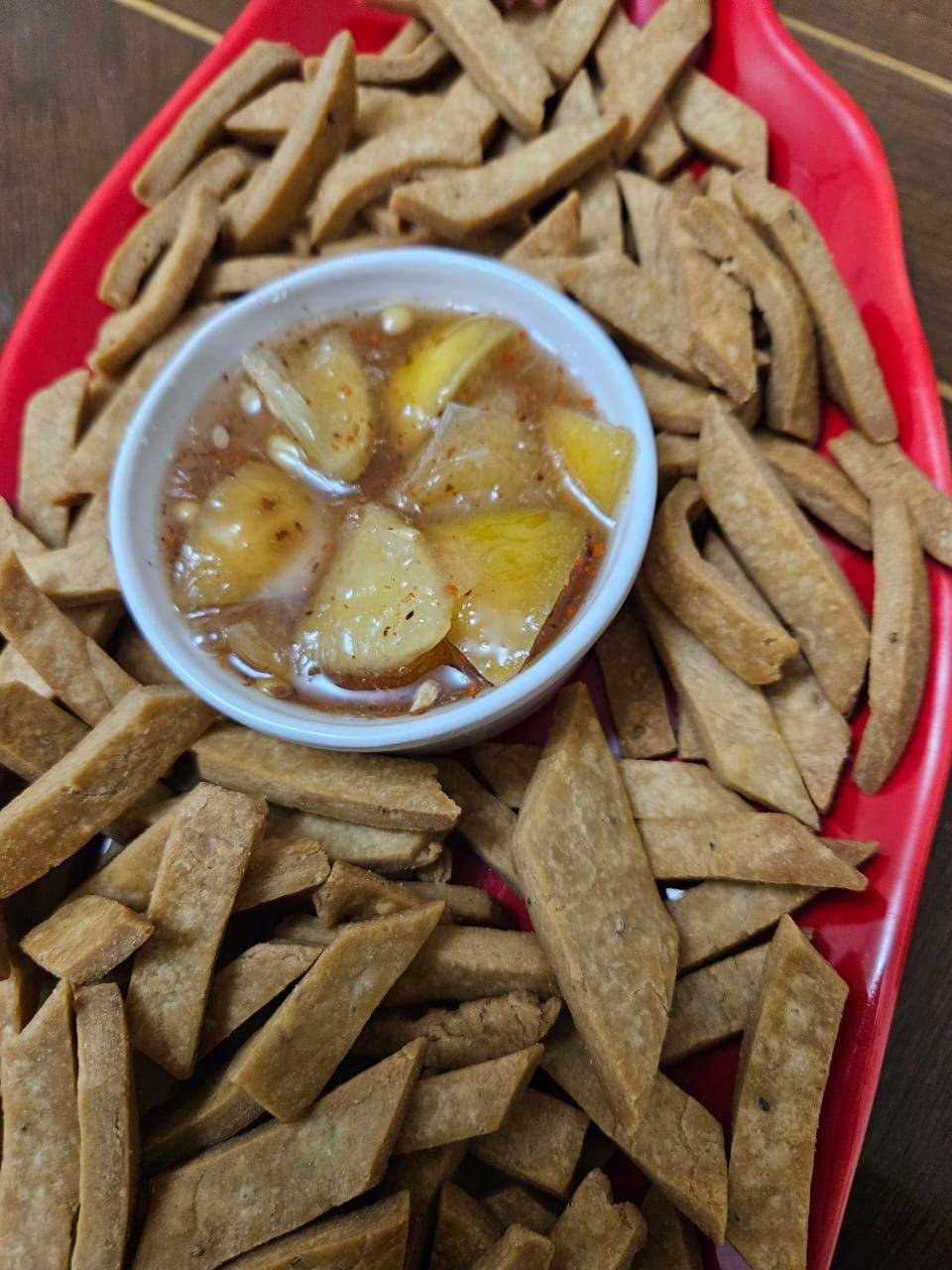
Mango pickling looks simple from the outside — cut the fruit, add spice, add oil, wait. In practice, it’s one of the more demanding things our kitchen makes each year, and the sun does more of the real work than any of us do. Here’s what actually goes into a jar of sun-ripened mango pickle.
Raw mangoes for pickling need to be firm and just the right shade of green — too young and they turn bitter, too ripe and they won’t hold their texture through the maturing process. This is a judgement call more than a rule, and it’s one that’s been passed down rather than written in a recipe book, learned by feel over many pickling seasons.
Once cut and salted, the mango pieces are laid out to dry under direct sun for days, not hours. This slow dehydration draws out excess moisture and concentrates the mango’s natural tang, which is exactly what lets the spices cling to it properly later. Skipping or shortening this step is the single biggest shortcut factory pickles take, and it’s the one step weather can genuinely delay.
Mustard, fenugreek, hing and chilli — sun-dried and hand-pounded themselves — are mixed into the sun-dried mango by hand, in proportions our family has refined over years. Mustard oil is added last, enough to coat everything without drowning it, and the whole mix is turned carefully so every piece gets an even share of spice.
The jar is left to mature in the sun for several more days, opened and stirred occasionally, until the mango has properly absorbed the spice and released its own oil. There’s no artificial preservative shortcut for this stage — it either gets the time it needs, or the pickle simply isn’t ready, no matter how good it might look on day one.
Because sun-drying is at the heart of the process, no two pickling seasons run on exactly the same schedule. A cloudier stretch of weather means the mango and spice need longer under the sun before they’re ready — something a factory process with controlled heating never has to account for, but that we’ve simply learned to work around.
From sun-drying the mango to letting the finished pickle mature, the process typically spans one to two weeks, depending on the weather.
The sun helps the mango properly absorb the spice and release its own natural oil, which is what gives the pickle its final texture and flavour.
It’s slow, it’s weather-dependent, and it can’t be rushed — which is exactly why sun-ripened mango pickle still tastes the way it did in our grandmothers’ kitchens.






[…] The Art of Sun-Ripened Mango Pickling […]