Address
304 North Cardinal
St. Dorchester Center, MA 02124
Work Hours
Monday to Friday: 7AM - 7PM
Weekend: 10AM - 5PM
Address
304 North Cardinal
St. Dorchester Center, MA 02124
Work Hours
Monday to Friday: 7AM - 7PM
Weekend: 10AM - 5PM
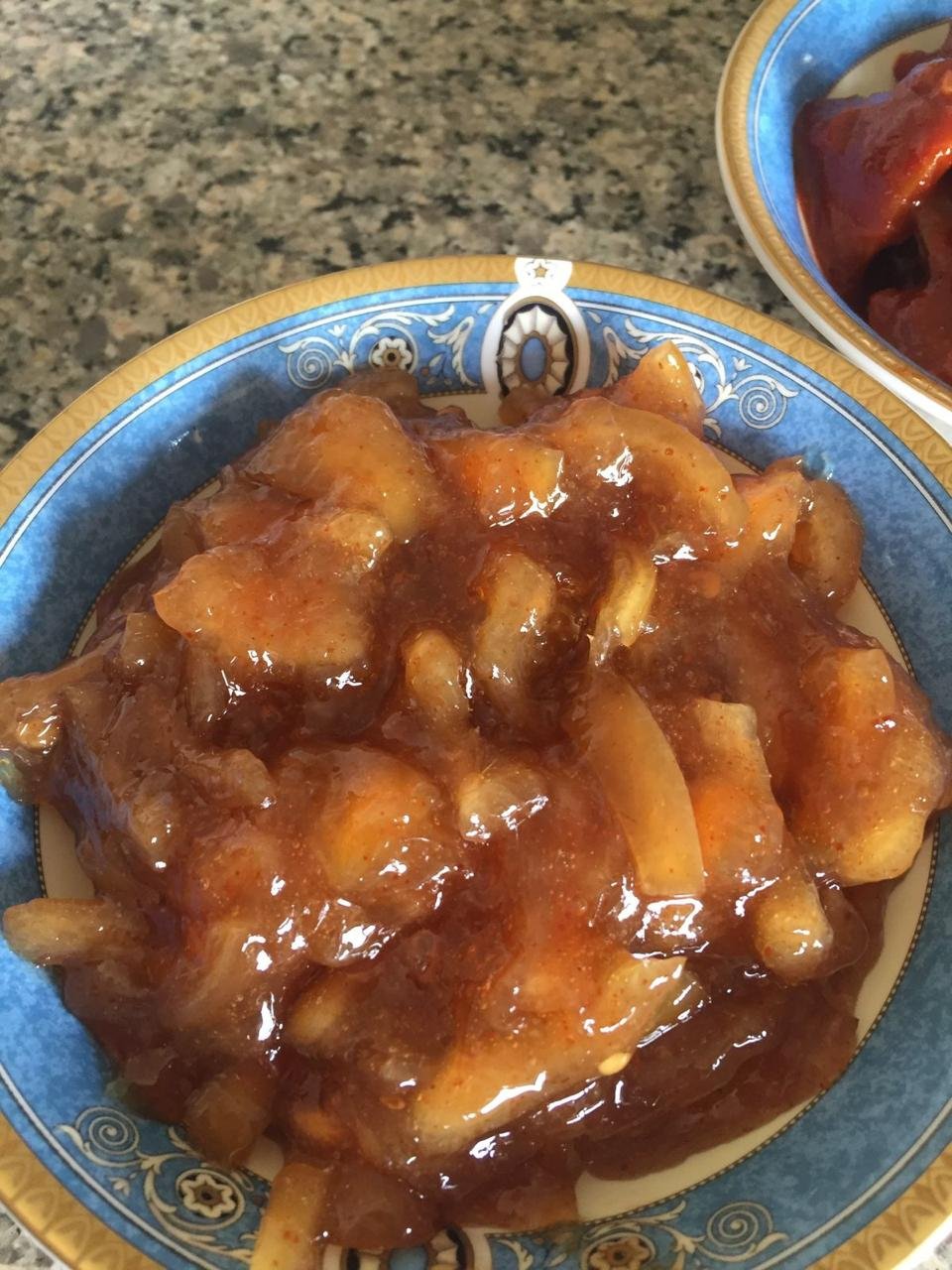
Ask anyone from a Bihar kitchen what makes an achaar taste like home, and hing and mirch will come up before anything else. It’s a combination so ordinary in our kitchen growing up that it took years to realise how much it actually defines the flavour of a Bihar-style pickle.
A small amount of hing, bloomed briefly in hot mustard oil before anything else goes in, gives a Bihar pickle its deep, savoury undertone. It’s subtle enough that you won’t necessarily notice it on its own, but its absence is immediately obvious — the achaar tastes flatter, less rounded, without it. Getting the timing of blooming it right is a small skill in itself, passed down rather than measured.
Dried red chillies, sun-dried and coarsely pounded rather than turned into fine powder, give the pickle both its heat and its deep red colour — naturally, without any artificial colouring. The coarseness matters too; it lets pockets of concentrated heat sit through the jar instead of spreading evenly thin, so each bite carries a slightly different intensity.
Hing rounds out the sharpness of the mirch, and the mirch keeps the hing from tasting one-note. Balanced correctly, in proportions that were tested and adjusted over years in our own kitchen, the combination is what gives JYOWNAR’s achaar its distinct Bihar character, rather than the generic pickle taste found on most store shelves.
It would be easy to simplify this — use a hing-asafoetida blend powder, a standard red chilli powder, save some time. We haven’t, because the moment you do, the pickle stops tasting like it came from a Bihar kitchen and starts tasting like it came from anywhere.
The hing-mirch combination is most noticeable in our mango and chilli pickles, where it forms the backbone of the flavour rather than sitting in the background. It’s the first thing many of our customers from Bihar recognise, often before they’ve even read the label.
Beyond its savoury base note, hing has traditionally been valued in Indian kitchens for its digestive properties, which is part of why it’s a staple in pickle-making.
It carries real heat, in keeping with Bihar-style pickle tradition, but it’s balanced by hing and the other spices rather than left to overpower the jar.
Some traditions are worth the extra step. Hing-mirch, for us, is one of them.